


SailMatch - Premium Yacht Booking Service Mobile App...
👀 3047 views
❤️ 336 likes
Too Long;
Didn't Read
+31% faster loan assessments, +28% better score accuracy. See how a credit scoring interface replaced fragmented reports:
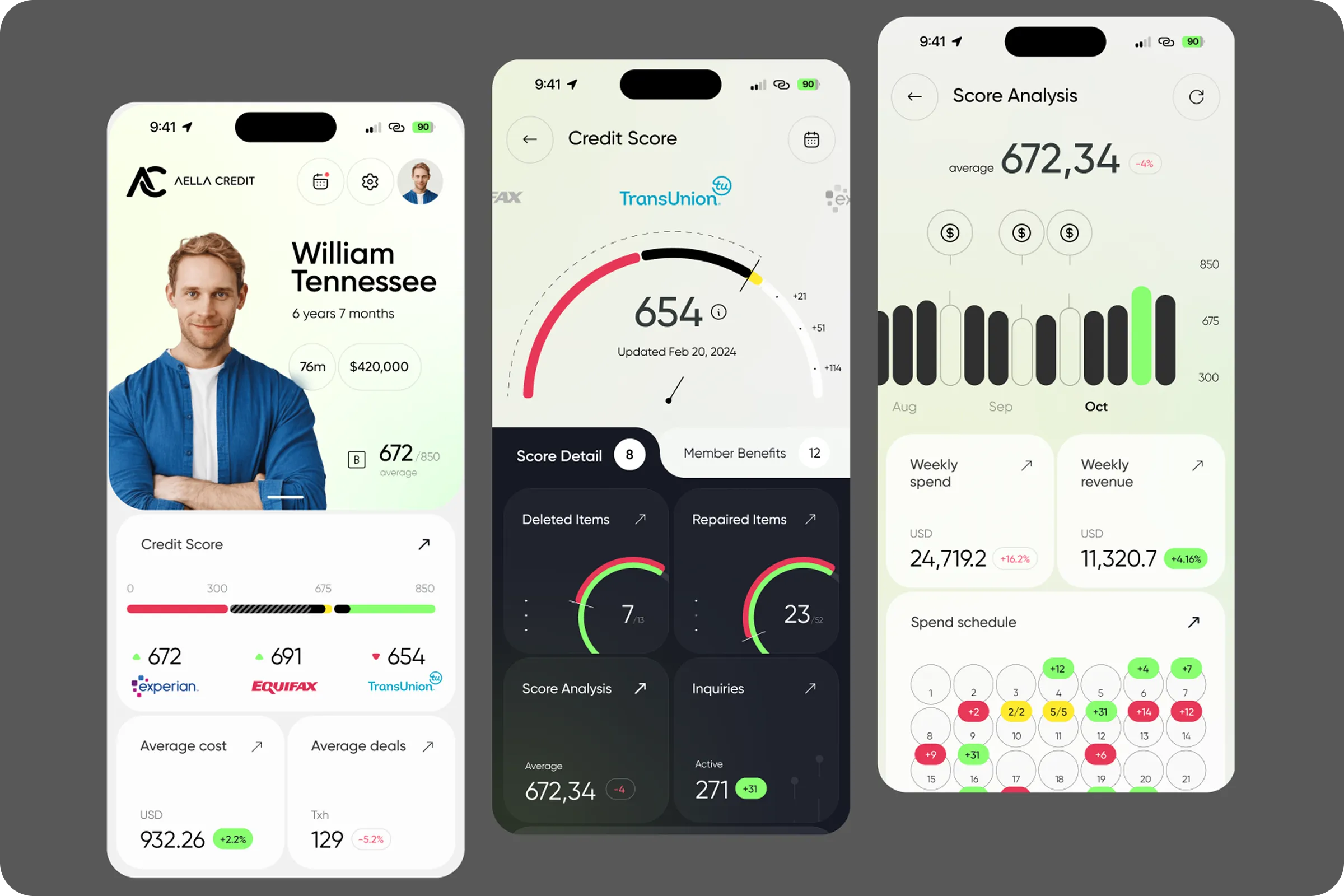
We are looking for a UX-focused solution to build a credit scoring app that improves borrower evaluations through behavioral analytics and adaptive dashboards.

Product Lead at Aella Credit

A finance credit score mobile app that helps lending teams evaluate borrower creditworthiness using real-time credit data analytics, machine learning, and customizable dashboards to speed up loan decisions and lower credit risk.
Industry
Fintech
Category
Dashboard
Location
Denver, Colorado, USA

Credit analysts lacked a unified view of borrower data and had to navigate through multiple reports to form a complete picture. The existing interface made it difficult to prioritize urgent signals, and the scoring models did not reflect real-time borrower behavior, producing the kind of static risk assessment that misses the patterns that matter most in lending decisions.
Fragmented Data Access
Analysts reviewed multiple reports to understand a single borrower profile. That fragmentation increased loan processing time and reduced overall productivity, which is the recurring failure mode a credit score app UI design has to solve before anything else.
Complex Navigation Flows
The previous UI buried key metrics behind too many clicks. Users needed quick access to core credit insights, and the interface was asking them to work around it rather than through it.
Outdated Scoring Models
Static scorecards did not reflect real-time borrower behavior. That gap led to inaccurate credit risk decisions and increased non-performing loan rates, which is where a credit analytics software rebuild carries its highest business value.

We analyzed the existing user flow, market benchmarks, and team feedback to identify the specific efficiency gaps costing credit teams time and accuracy. UX research, behavioral analysis, and design workshops combined into a process that shaped interface decisions around how credit analysts actually work rather than around the features a scoring platform typically ships.
Our approach was centered around real-time user behavior to guide the redesign process.

Team Lead

The goal was a data-driven UI UX that reduced manual work, improved credit scoring speed, and enabled customizable reporting, delivering better engagement and higher operational efficiency across the lending team's daily workflow.
Real-Time Data Widgets
We consolidated fragmented borrower data into a single-screen summary, reducing the tab-switching that had been costing analysts review time on every loan assessment.
Device Management Panel
The new scoring interface surfaced real-time behavioral signals alongside traditional credit metrics, giving analysts a richer risk picture without adding steps to the review process.
Embedded Alerts and Actions
Credit teams gained control over which metrics appeared in their dashboard view, reducing the noise that had made it hard to focus on the signals that mattered most for each loan segment.

Research confirmed that analysts needed better access to behavioral analytics and faster scorecard configuration. Interactive dashboards that reduced review time and improved scoring accuracy were the consistent request across every interview session, which shaped the modular widget approach that defined the final design.
43% - Faster Score Access
UX audits revealed that users spent 43% less time accessing key borrower metrics after the dashboard redesign, improving loan decision speed across the credit team.
35% - Reduction in Manual Reporting
Behavioral analytics integration lowered manual reporting tasks by 35%, freeing credit teams to focus on high-value assessments rather than data assembly.

We rebuilt the interface with modular widgets, simplified navigation, and interactive scorecards, integrating behavioral patterns and real-time updates to improve user flow and decision accuracy across the full loan review cycle.
Dynamic Behavioral Scorecards
Modular scorecards adapt based on borrower behavior patterns, improving credit scoring relevance across multiple borrower segments and reducing the reliance on static historical data.
Credit Portfolio Dashboard
A customizable credit score dashboard UI lets credit teams track borrower health, credit trends, and risk signals in real time with fewer clicks, turning the daily portfolio review from a multi-screen exercise into a single-view workflow.
The biggest win was making credit evaluation faster without sacrificing insights.

CEO

The redesigned credit score analytics interface improved analyst satisfaction and reduced loan assessment time, delivering measurable efficiency gains for credit teams and increasing borrower evaluation accuracy across the platform.
+28% Increase in Score Accuracy
Machine learning-based behavioral scorecards improved credit risk identification by 28%, lowering the churn rate of approved loans and giving lending teams a more reliable foundation for lending decisions.
+31% Faster Loan Assessments
The new UX reduced average credit review time by 31%, improving approval turnaround and operational efficiency. For a team processing high volumes of application credit score evaluations daily, that reduction compounds into meaningful capacity gains across the month.

We see potential in adding cross-platform reporting features to the Aella Credit App and continuing dashboard improvements based on user feedback.
Product Lead at Aella Credit

SailMatch - Premium Yacht Booking Service Mobile App...
👀 3047 views
❤️ 336 likes
Explore the Solvely AI UX/UI case study. We...
👀 1634 views
❤️ 378 likes
The SailMatch - Yacht Personalized Searching Service Onboarding...
👀 3176 views
❤️ 343 likes
Locate containers, view condition reports, and manage rental...
👀 3144 views
❤️ 345 likes
Shall we chat?
[email protected]Let’s

talk


