


Poor UX design examples - quick fixes and...
👀 1934 views
❤️ 89 likes
What’s on the menu?
Graphic design trends today are constantly evolving, bringing in new perspectives, technological advancements and, surely, new vision. In mid-2025, we're seeing an interesting phenomenon - human realness and new tech inventions come together in a tandem.
This could only mean crucial duality in design approaches that shapes both visual aesthetics and interactive experiences.
We at RDL like to describe the trend scene as “push-pull relationship”. The high-quality, perfect design combined with human imperfection that embraces differences surely creates an interesting picture.

10 Design Trends
Adobe came up with a list of 10 design trends, in which “AI-powered design” placed first and “Handcrafted” design placed tenth. This dynamic suggests an evolving motion against AI that we are about to enter.
1st place - AI-powered
Artificial Intelligence design overtook the design scene, resulting in society getting massively tired of it. On social media, users check design elements for the source, hoping it is not AI generation.
Due to that, various publications suggest we will see a shift towards naturalness and realness.

UX Architect
seems to be the motto of design in today’s environment of UX & UI. In the overdone environment of similar art, trends predict uniqueness is a major benefit. According to various publications, “minimalist maximalism” and regards to vintage is best seen by the audience.

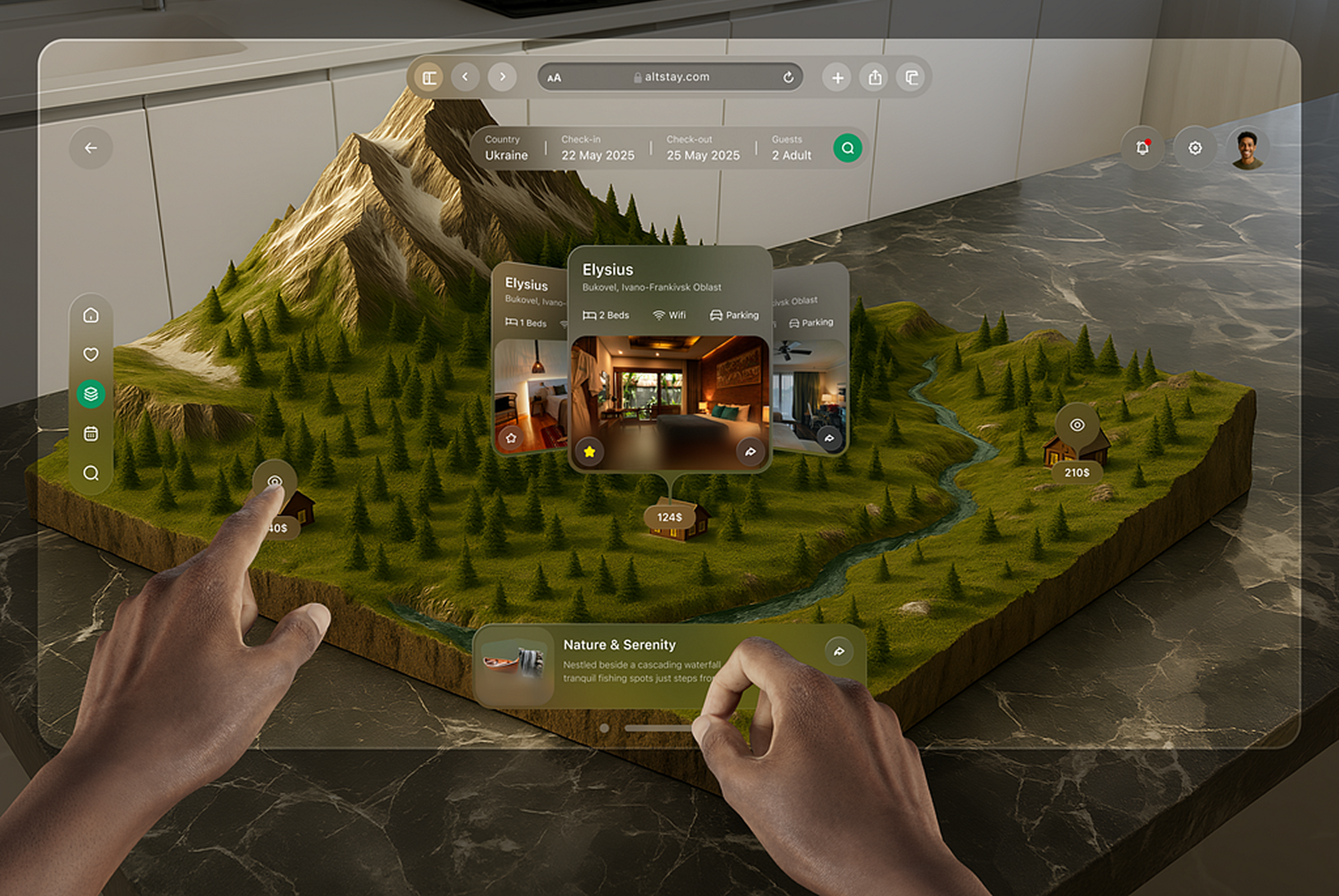
Zero UI and “invisible interfaces” are shifting UX away from taps, and toward interactions that feel more familiar. Instead of navigating screens, people speak, move, glance, or simply exist in a context where the system can respond. This includes Voice User Interfaces, or VUIs, but also gesture control, gaze, ambient sensing, haptics, and automation.
In practice, Zero UI is not about removing design. It is about designing the interaction itself when there is no traditional interface to lean on.
A good VUI must make it clear what the system can do. This means guide the user without overwhelming them and recover gracefully when it misunderstands.
The same is for gesture-based systems or ambient experiences, where feedback has to be subtle but still noticeable.
AI is accelerating this shift because it can interpret messy human input. Speech is ambiguous, gestures are inconsistent, and real-world environments are noisy. AI helps systems understand intent, personalize responses, and adapt to context. It makes interaction feel less “menu-driven” and more conversational or intuitive.
For product designers, AI can also support prototyping, generating variations, testing flows, and simulating conversations. Zero UI principles push the experience to be simpler, so the user stays focused on their goal.
The result is more subtle: fewer controls, more adaptive behavior, and systems that “just work” in the moment. But it also raises new design challenges around privacy, transparency, error handling, and inclusivity (accents, disabilities, cultural gestures).
Another important trend is personalization. Users are interested in designs that feel special and, like said before, cut through the noise. This means websites and apps will change based on what users like and how they behave. Using AI, designs change to fit each person better, making the experience more interesting and enjoyable.
RDL guidance
We at RDL follow this rule. Personalization helps technology feel more natural and real, giving users something that feels unique and special. This fits well with the idea of creating designs that look good and also connect with people in a personal way.
We create our projects, learning everything about our client. From vision to mission, we make sure to tailor the product to the needs of our customer. In 2026, this marks successful design - unique styles that share the message.

The last trend is less about a new “look” and more about a new stance. Beyond aesthetics and usability, teams are putting increasing weight on responsible design: building products that are safe, fair, and respectful of people’s time, attention, and data. It reflects a shift in expectations. Users and regulators are less willing to accept “move fast” behavior when the cost is privacy violations, addictive engagement loops, or biased automated decisions.
Choosing Transparency
Responsible design shows up in concrete choices. It means transparent consent instead of dark patterns, and privacy that is built in by default rather than added later. It means designing for accessibility and inclusion from the start, not as a compliance checklist at the end. It also means taking AI seriously as a design material: being clear when AI is involved, avoiding manipulative personalization, and providing understandable explanations, human override, and safe failure modes when systems make mistakes.
In other words, responsible design expands the designer’s job. The goal is not only to create user flow that works and looks good, but something that earns trust over time. That requires thinking about long-term impact, edge cases, power dynamics.
Sustainability & Eco-friendliness
“Sustainability and eco-friendly design” is becoming a practical priority in digital work, especially as the environmental cost of the internet becomes harder to ignore. At its core, it means reducing the energy required to deliver and use a website by making it lighter, faster, and more efficient across the full lifecycle, from development to hosting to everyday browsing.
A sustainable site often starts with performance-first design: fewer heavy assets, optimized images, modern formats, and restrained use of video and animations. Cleaner interfaces are not just an aesthetic choice. They can reduce data transfer and CPU/GPU workload, which lowers energy use on both servers and user devices. On the engineering side, teams focus on leaner code, fewer third-party scripts, and smarter loading strategies so pages do not download or render more than necessary.
Ethical Design
Ethical web design practices focus on creating experiences that respect people rather than exploiting them. Instead of using confusing flows or pressure tactics, ethical design prioritizes clarity, ease of use, and informed choice. That starts with straightforward navigation, readable content, and predictable interactions that help users complete tasks without frustration or unnecessary steps.
A key principle is privacy by default. Ethical sites limit tracking to what is truly needed, collect the minimum amount of data, and explain clearly why information is being requested. Consent is meaningful and specific, not buried in long banners or pre-checked boxes. Users should be able to change settings, opt out, or delete accounts without having to search for hidden controls.
Ethical practice also means avoiding manipulative patterns such as fake scarcity messages, sneaky subscriptions, and “confirm-shaming” language. Forms are designed to be simple and accessible, pricing and terms are transparent, and errors are explained in a helpful, non-blaming way. When personalization or AI is used, the site should be honest about it and keep the user in control.
These trends signal social and environmental responsibility, signifying a maturation of the digital industry where design contributes positively to society and the planet.
UX Architect

To summarize, the trend scene today is battling, contradicting yet exciting. The popularity of AI results in the protest of artists, promoting naturalist visuals and raw textures. Design today has become a part of any digital product, creating the shell and crafting all interactions.
Because of its popularity, web design ethics overtake the scene, promoting more healthy ways to design and use energy. As fast as it is evolving, we can expect to see changes.
Or, who knows? Maybe, tomorrow someone comes up with a new idea that will dominate the market. It is possible, nonetheless…

Poor UX design examples - quick fixes and...
👀 1934 views
❤️ 89 likes
Explore the debate of trending vs timeless design....
👀 3112 views
❤️ 147 likes
Avoid common SMM design mistakes with our expert...
👀 2313 views
❤️ 175 likes
Most successful website design is complex. Read to...
👀 5827 views
❤️ 933 likes
Shall we chat?
[email protected]Let’s

talk


